
Bringing Nature
Back to Education

Hands-on learning that grows responsibility, connection, and care for the world around us.
At Montessori Bilingual Academy of Rockledge, our Agriculture Department is a living classroom. Through gardening and animal care, students learn where food comes from, how ecosystems work, and what it means to take responsibility for living things.
Rooted in Montessori and Cosmic Education principles, this program invites children to slow down, observe, contribute, and understand their role in a larger community—one plant, one animal, one meaningful task at a time.
The Agriculture Department
A Living Extension of Montessori Learning
The Agriculture Department at Montessori Bilingual Academy of Rockledge is designed to reconnect children with the natural world through meaningful, hands-on work. This department brings Montessori principles to life by giving students real responsibilities that contribute to their school community.
Through daily care of gardens and animals, students learn to observe closely, work with intention, and understand how their actions impact living systems. Agriculture becomes a gateway to science, practical life, environmental stewardship, and character development—all grounded in Cosmic Education.
The department includes two core program paths, each offering a unique way for students to engage with nature:
Two Ways Students Participate
Centered on the daily care of chickens and ducks, Poultry Patrol helps students build responsibility, empathy, and confidence through animal stewardship.
Focused on plant care, gardening, composting, and environmental observation, Guardians for the Garden teaches students how ecosystems grow and thrive through consistent care.
Together, these programs help students see themselves as capable contributors—learning not only about the world, but how to care for it.
What Students Do
-
Clean the poultry coop with a hose
-
Collect eggs daily
-
Feed the chickens and ducks
-
Refill water, hay, food for adequate animal health
What Students Learn
-
Empathy through consistent animal care
-
Responsibility for daily tasks that matter
-
Confidence in being trusted with real work
-
How teamwork supports the wellbeing of others
-
Where food comes from and how animals are cared for ethically
For many students, Poultry Patrol becomes a point of pride—and a place where they feel deeply connected to the animals and to one another.
Poultry Patrol Expectations & Duties
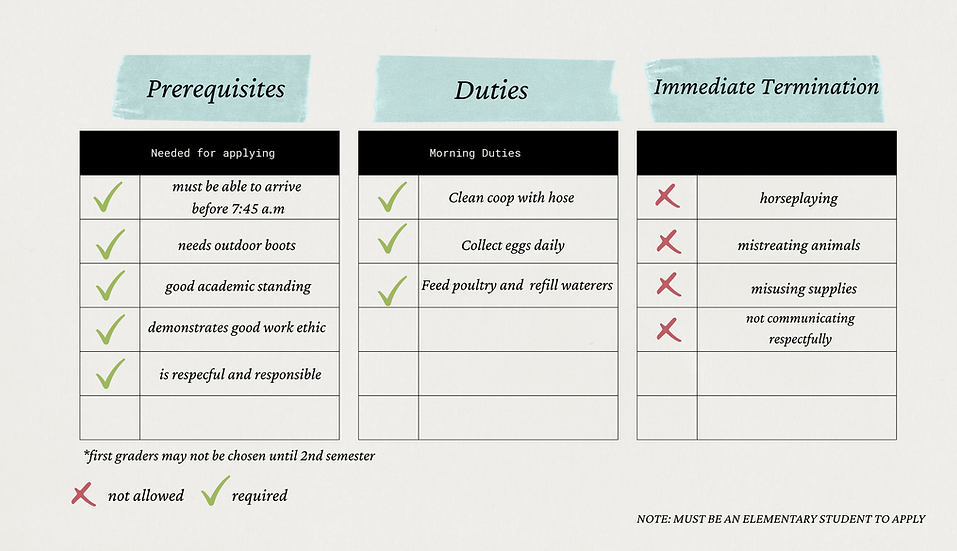
How to Apply
Poultry Patrol involves daily care of living animals and requires a high level of responsibility and consistency. Only Elementary students are eligible to participate.
Application Steps
-
Review the Poultry Patrol expectations and duties.
-
Complete a physical Poultry Patrol application.*
-
Participate in a brief interview with the head of the department.
Because animals depend on daily care, participation is based on readiness and demonstrated responsibility.
*Please note: We encourage applicants to complete their applications independently, as we strive to promote self-sufficiency.
Poultry Patrol
Caring for Animals. Building Responsibility. Growing Empathy.
Poultry Patrol gives students the opportunity to care for the ducks and chickens that live on campus. This daily work helps children develop empathy, consistency, and respect for living beings who depend on them.
Students learn that animals thrive when they are cared for thoughtfully and responsibly. Through routine and teamwork, Poultry Patrol becomes a powerful lesson in stewardship, accountability, and compassion.

Testimonials
“Who would have thought that a dumped Easter gift would bring so many so much happiness!”

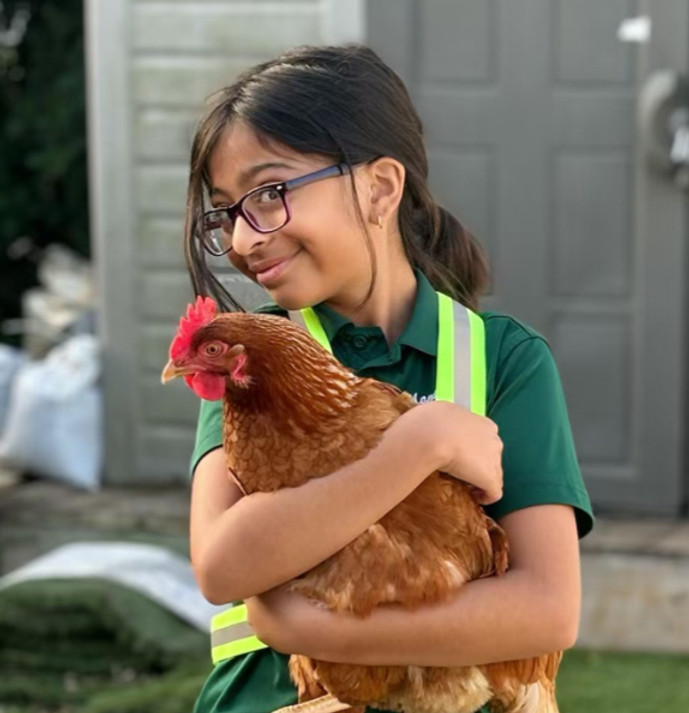
"You get to learn agricultural skills and interact with animals and its important to connect with them."
-Mariyam, 9 yo

"When they are with me I feel that they are part of my family.”
-Zoë, 9 yo
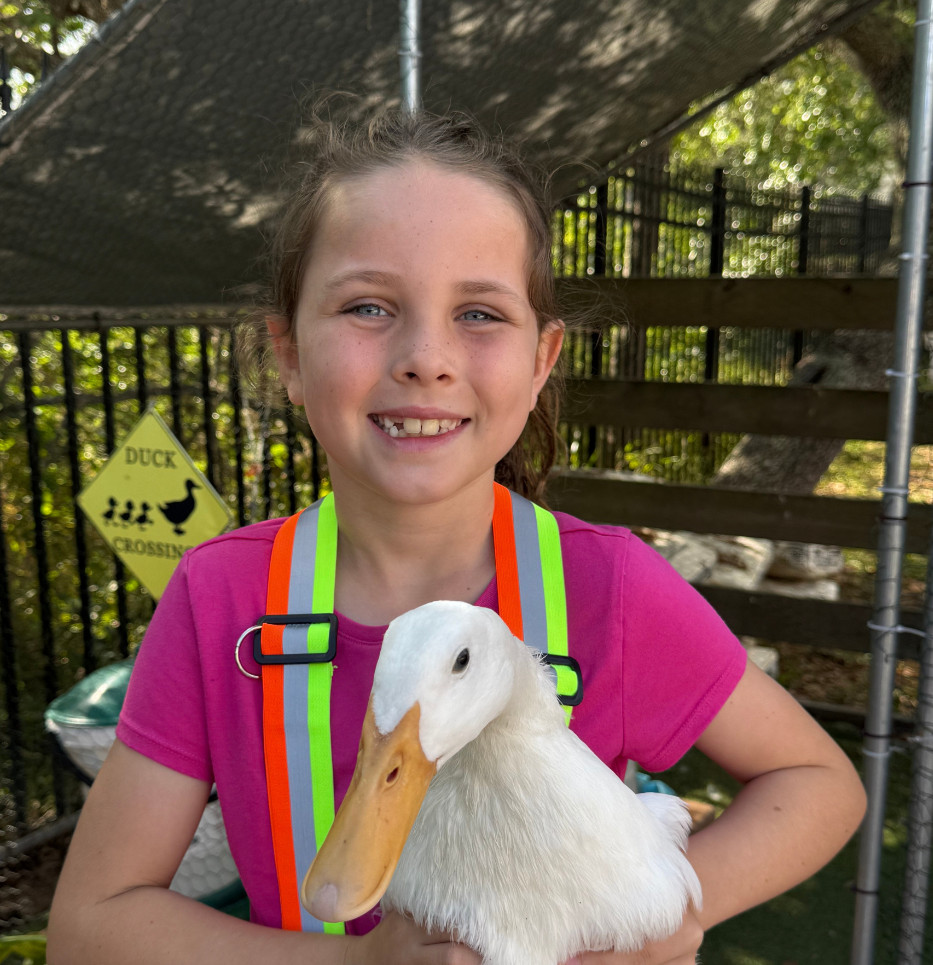
"Everyone should apply to participate because the more helpers for poultry patrol the healthier we can keep the ducks and chickens."
-Cora, 7 yo
Origin Story
of Poultry Patrol

Guardians of the Garden
Learning to Care for the Earth,
One Plant at a Time
The Horticultural Program invites students to step into the role of caretaker—tending gardens, observing plant life, and learning how healthy ecosystems grow. Known as the Guardians of the Garden, students take responsibility for nurturing plants and outdoor spaces through consistent, meaningful work.
Horticulture teaches children that growth takes time, attention, and care. Through hands-on experience, students develop patience, responsibility, and a deeper appreciation for the natural world.
What Students Do
-
Water and maintain garden beds
-
Pull weeds and care for soil health
-
Inspect plants for insects and signs of disease
-
Rotate and fill the compost drum
-
Observe pollinators and seasonal changes
-
Harvest produce when it’s ready
What Students Learn
-
Basic plant science and life cycles
-
How ecosystems function and stay balanced
-
Responsibility through daily and weekly care
-
Observation, patience, and follow-through
-
Pride in contributing to something living and shared
This program encourages students to slow down, notice details, and understand that their actions directly impact the growth and health of the garden.
How to Apply
Students interested in joining the Horticultural Program must demonstrate readiness for consistent outdoor work and shared responsibility. Only Elementary students are eligible to participate.
Application Steps
-
Review the program expectations and responsibilities.
-
Complete a physical Horticultural Program application.
-
Participate in a brief interview with the head of the department.
Students are encouraged to complete their applications independently as part of building self-sufficiency and ownership.
Guardians of the Garden
Expectations & Duties
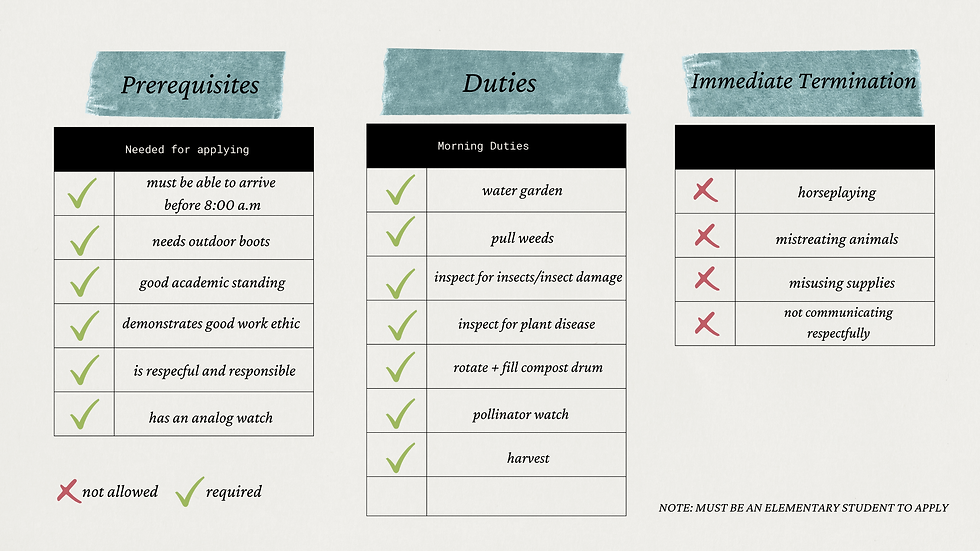
Rooted in Montessori & Cosmic Education
Where Hands-On Work Meets Big-Picture Understanding
The Agriculture Department is a natural extension of Montessori education and Cosmic Education. It allows students to explore how all living things are connected—and how their actions play a meaningful role within that system.
Through gardening and animal care, students move beyond abstract concepts and into lived experience. They don’t just learn about responsibility, science, or community—they practice it daily.
01
Practical Life
Students engage in purposeful work that builds independence, coordination, responsibility, and confidence.
02
Science & Nature Studies
Children observe plant life cycles, ecosystems, weather patterns, insects, animals, and environmental cause-and-effect in real time.
03
Cosmic Education
The program supports the Montessori belief that children should understand their place in the universe and their responsibility to care for the world around them.
04
Character & Social Development
Students practice teamwork, follow-through, respect for living things, and accountability within a real community context.
The Agriculture Department transforms learning from something children are told into something they experience—making lessons meaningful, memorable, and deeply human.

The Educators Behind the
Agriculture Program
A Mission Rooted in Nature, Responsibility, and Care
In an era where digital screens command attention and hands-on learning often takes a backseat, Mrs. Fernanda Christiano and Mrs. Kat Fraleigh set out to bring the natural world back into the classroom.
With a deep commitment to their students and a shared belief that education should be immersive, meaningful, and lived, they launched what would become the Poultry Patrol and Horticultural Program. What began as a year-long project quickly grew into a thoughtfully designed Agriculture Department—one that is now a lasting part of the Montessori experience.
Here, children trade touchscreens for soil-stained hands. They nurture plants, tend to animals, and witness firsthand the delicate interplay between science, responsibility, and nature. Learning unfolds not through worksheets, but through care, observation, and contribution.
“One of the best things we can teach the next generation is how to be responsible and loving humans. Learning how to take care of animals and cultivate the earth is one of the ways we are helping to do this.”
— Mrs. Kat Fraleigh
“What began as a year-long project for our schooling served as the catalyst for thoughtfully designed nature programs that are here to stay.”
— Mrs. Fernanda Christiano
Support Our Program
It Takes a Community to
Keep It Growing
The Agriculture Program thrives because of the care and commitment of our wider community. In addition to student leadership during the school day, families and supporters play an important role in sustaining the gardens, animals, and learning experiences that make this program possible.
There are two meaningful ways to support the Agriculture Program:
Volunteer Your Time
Support our Poultry Patrol during weekends, holidays, and school breaks by helping care for our animals when school is not in session.
-
Flexible scheduling through SignUpGenius
-
No long-term commitment required
-
Each shift directly supports the wellbeing of our animals
Volunteering offers families a hands-on way to contribute while modeling responsibility, stewardship, and care for living things.
Donate
Donations help sustain the daily needs of the Agriculture Program and support its continued growth.
Contributions directly support:
-
Animal feed and care supplies
-
Garden tools and materials
-
Maintenance of outdoor learning spaces
-
Program resources for student learning
Every contribution—large or small—helps keep this living classroom healthy, supported, and accessible to students.

Opening Soon!
The Agriculture Department at Montessori Bilingual Academy of Rockledge is a hands-on Montessori program where Elementary students learn responsibility, science, and environmental stewardship through gardening and animal care.